Monthly Archives: July 2026

Procedural Lapses vs Substantive Justice: Supreme Court on Retrial Doctrine
The administration of criminal justice rests upon two fundamental pillars—procedural fairness and substantive justice. Procedural law provides the framework within which justice is administered, ensuring fairness, transparency, and protection of rights. Substantive justice, on the other hand, focuses on the ultimate goal of delivering justice based on truth and fairness. However, a conflict often arises when procedural lapses occur...

Triple Talaq and Gender Justice: A Critical Analysis of the Muslim Women (Protection of Rights on Marriage) Act, 2019
Marriage under any system of law entails an implied commitment — that its termination, in case it cannot be avoided, will take place with fairness and formality. The use of instantaneous triple talaq in Muslim family law, where the husband was allowed to dissolve the marriage irretrievably merely by pronouncing “talaq” thrice in a single breath, was a promise...
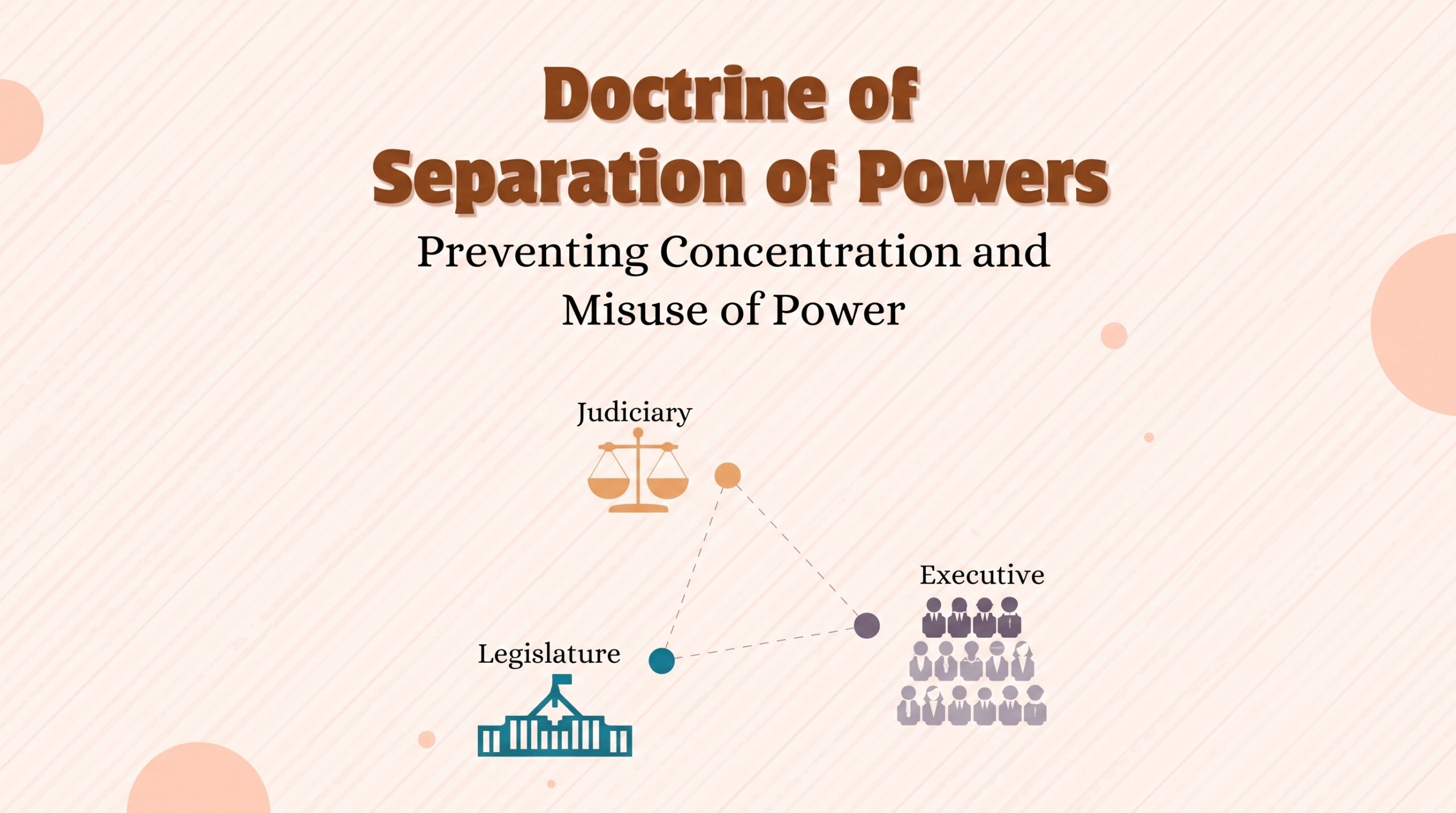
Constitutional Equilibrium: The Evolving Doctrine of Separation of Powers in India
The doctrine of Separation of Power stands as core principles of constitutional governance ,incorporated in Constitution to prevent the concentration of authority and ensure liberty for the citizens.The foundation of the doctrine lies in the idea that power corrupts when left unchecked , the doctrine distributes government authorities into three wings – legislature , executive and Judiciary ,each delegated...

I bought an expensive imported machine for business use, but it stopped working and the company refuses replacement — can I sue for business loss too?
In an era of globalised trade and rapid technological integration, Indian businesses increasingly rely on sophisticated imported machinery — from precision manufacturing equipment to high-end medical devices — to sustain and grow theiFr operations. The procurement of such machinery represents not merely a commercial transaction but a strategic investment, often involving lakhs or crores of rupees, extended procurement cycles,...
- 1
- 2