Category : Criminal Law & Litigation
Plea Bargaining in India: Success, Challenges & Way Forward
IntroductionMeaning of plea bargainingPlea bargaining is a legally regulated process within the criminal justice system whereby the accused, of their own free will, agrees to plead guilty to a specified charge or accept a reduced sentence in return for concessions from the prosecution, subject to judicial oversight, with the objective of ensuring speedy justice and efficient case disposal.The key...

VAGUE ALLEGATIONS IN CRIMINAL LAW
1. Abstract The foundation of India’s criminal justice system, in many contemporary contexts, rests upon the “right to a fair trial,” and the necessity for clarity in this regard is deeply rooted in the principles of “Common Law.” The fundamental import of this principle is that the accused must be provided with full and complete information regarding the specific...

CRIMINAL TRIAL DELAY: THE SUPREME COURT’S POSITION ON SPEEDY JUSTICE IN 2026
ABSTRACT India’s court system is experiencing increasing delays that compromise justice, despite the country’s diverse society reflecting harmony. The idea that “justice delayed is justice denied” emphasizes the significance of the right to a prompt trial, guaranteeing both justice for the accused and prompt compensation for victims. The public and legal professionals are concerned about the growing backlog of...
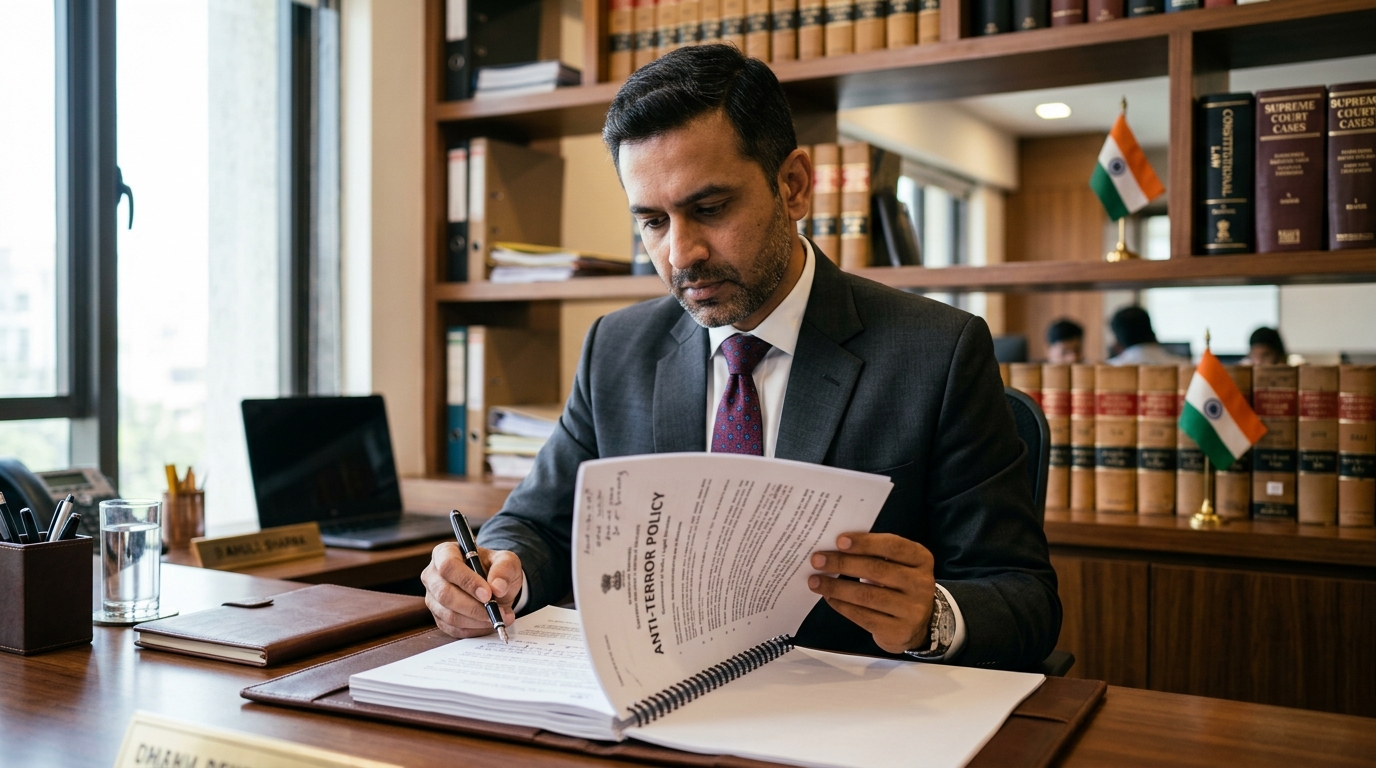
PRAHAAR Anti-Terror Policy – LEGAL FRAMEWORK AND CHALLENGES
ABSTRACT:The PRAHAAR framework really digs into counterterrorism with prevention leading the way, using quick and targeted actions. It pushes for stronger institutions, tighter coordination between enforcement agencies, and never loses sight of legal safeguards. What really sets it apart is how it goes beyond old-school security measures. It actually values community involvement and sees deradicalization as key if you...
Misuse vs. Necessity of POCSO: The Complexities of Adolescent Consent Cases
The Protection of Children from Sexual Offences Act (POCSO), enacted in 2012, is undeniably one of the strongest child protection laws in India. It was created to combat a terrifying reality— sexual violence against children often went unreported, unnoticed, or unpunished. POCSO transformed this landscape by providing child-friendly procedures, gender-neutral definitions, special courts, and stringent punishments for every form...
The Role of Forensic Evidence in Solving Crimes
The most important characteristic of forensic is that it has become a significant factor in crime solving in addition to being an important part of criminal law. The importance of it in tracking, substantiating the accounts, and vindicating the unexpected is an invaluable record. The primary reason for the application of forensic evidence for criminal trials is in its...
Passion Homicide: Is the Heat of Passion Still Valid?
AbstractThe purpose of this article is to examine the heat of passion concept, as it is defined in the Bharatiya Nyaya Sanhita. We examine the origins of this concept, how it has developed, its current use in Indian courts, and several criticisms which have been raised against it. The intent of this paper is to demonstrate that this doctrine...
FROM RETRIBUTION TO RESTORATION: THE ROLE OF COMMUNITY SERVICE IN INDIA’S CRIMINAL JUSTICE DEVELOPMENT
The Indian criminal justice system has always believed in punishment without affording much scope for rehabilitation, where punishment was seen as a deterrent.The Indian Penal Code provided punishments like imprisonment for life, a specific term, or the capital penalty, leaving a very narrow room for restorative and reconstructive measures, per se. Thus, because of this, there was overcrowding of...
CONSENT IN SEXUAL OFFENCES
AbstractConsent forms the cornerstone of independence and legal responsibility in sexual offence cases. Contemporary criminal law progressively acknowledges that consent goes beyond verbal confirmation to encompass a willing, knowledgeable and ongoing assent. Confusions, about consent within close and imbalanced relationships frequently lead to coercion being wrongly seen as consent. Through the introduction of the Bharatiya Nyaya Sanhita, 2023 Indian...
The Impact of Digital Monitoring technologies as an Alternative to Cash Bail
The Indian criminal justice system operates on the fundamental presumption of ‘innocent until proven guilty’, stressing that bail, not jail, should be the guiding principle for those awaiting trial. But, this ideal is heavily compromised by the established practice of monetary bail and demanding surety bonds. This system creates a social economic division between those with financial means gain...