Category : Public, Administrative & Civil Rights Law

What Is Election Funding? Understanding the Legal Framework, Government Regulations, and Regulatory Authorities.
Election funding refers to the flow and use of money in the political process. It includes contributions made by individuals, companies and other organisations to political parties or candidates, as well as expenditure incurred by political parties and candidates during election campaigns.Election financing raises an important legal and constitutional question: while political parties and candidates require financial resources to...

Demolation without notice – Understand your legal rights in India
A house is a lot more than a place to live. It is where we feel safe and secure. It is where we can be ourselves. For people losing a house can be very sad and can cause a lot of financial problems. Lately there have been cases where the government has torn down houses without warning people first....
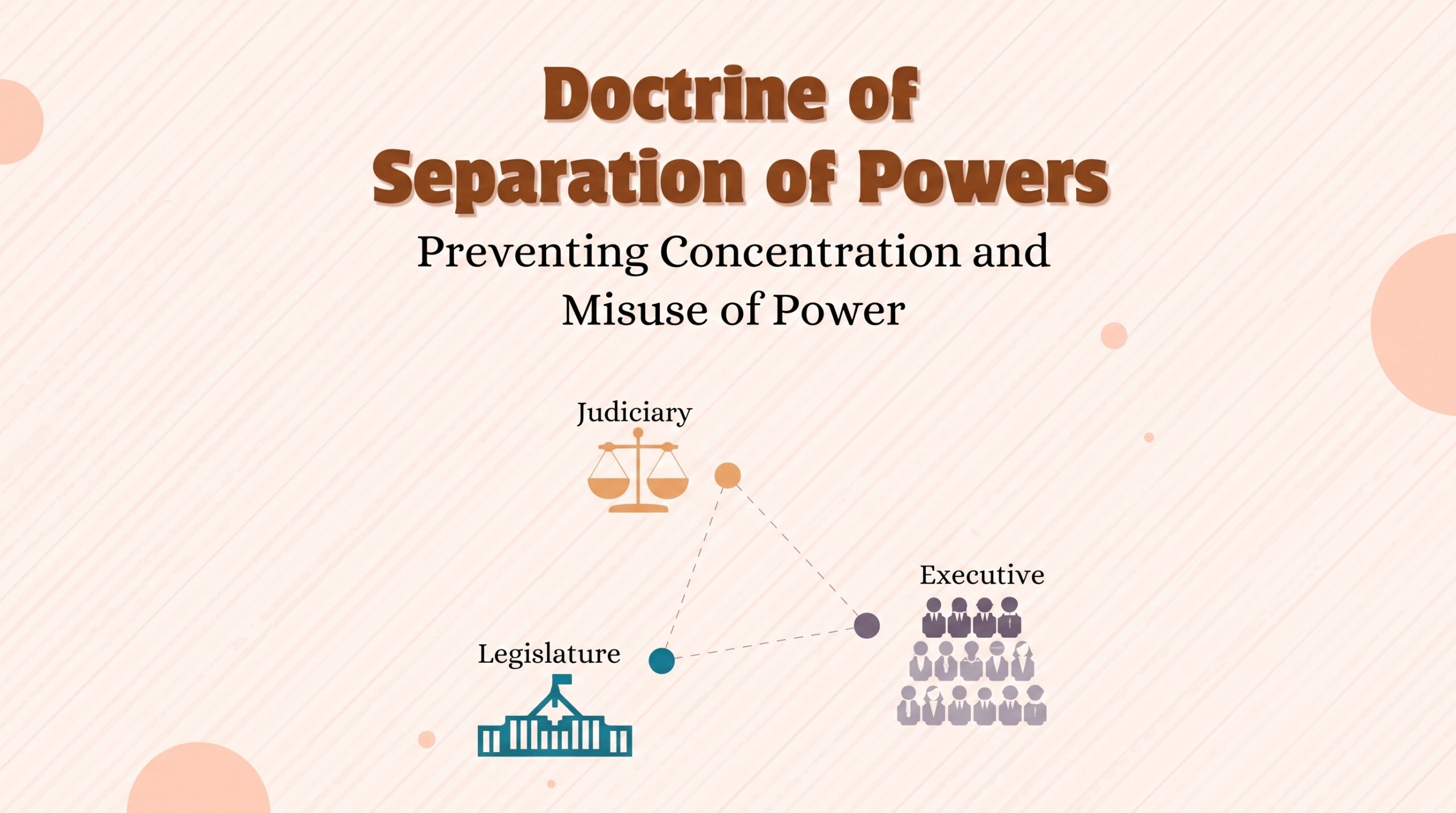
Constitutional Equilibrium: The Evolving Doctrine of Separation of Powers in India
The doctrine of Separation of Power stands as core principles of constitutional governance ,incorporated in Constitution to prevent the concentration of authority and ensure liberty for the citizens.The foundation of the doctrine lies in the idea that power corrupts when left unchecked , the doctrine distributes government authorities into three wings – legislature , executive and Judiciary ,each delegated...
CASE LAWS :DOCTRINE OF SEPARATION OF POWER
Case 1: Kesavananda Bharati vs. State of Kerala. Citation: (1973) 4 SCC 225 Court: Supreme Court of India Brief Facts Case came up when His Holiness Kesavananda Bharati, the leader of a religious mutt in Kerala objected to state land reform laws which tried to enforce property ownership limitations. The case was pending when some constitutional amendments were made...

AI Generated Judgements as Professional Misconduct
Introduction Stare Decisis is a foundational doctrine of common law requiring the courts of law to follow the rulings and judgements passed by a higher court in the past over matters of similar factum and cause thereby ensuring consistency and practicality of law. However, the use of generative AI as precedent rulings in the pleadings is a serious strike...

Code of Conduct: Ethical Guidelines for Public Officials
Public officials hold positions of trust that directly affect the lives of citizens, which makes ethical conduct essential in their daily functioning. A code of conduct serves as a guiding framework to ensure that officials act with honesty, integrity, and accountability while performing their duties. It outlines the standards of behavior expected from them, helping to prevent misuse of...
SOVEREIGN IMMUNITY APPLICABILITY IN CONTEMPORARY’S WORLD
INTRODUCTIONSovereign immunity, or crown immunity, is a legal doctrine whereby a sovereign or state cannot commit a legal wrong and is immune from civil suit and criminal prosecution. It is the exemption or immunity enjoyed by the state from being sued in another courts. It is developed as an “undisputed principle of customary international law” and the law of...

Red Tapism: Excessive Bureaucracy and Delay in Administrative Work
IntroductionRed tapism is commonly understood as the excessive use of rules, regulations, and formal procedures that result in delays and inefficiency in administrative functioning. It is most often associated with government offices, where decision-making becomes slow due to unnecessary paperwork, rigid adherence to procedures, and multiple layers of approval. Although rules are essential for ensuring accountability and order, their...
Coalition Politics: Alliance of Parties to Form Government
In parliamentary democracies, coalition politics refers to multiple political parties forming alliances to secure a legislative majority and form a government. Such arrangements become necessary when no single party attains an absolute majority, resulting in a hung parliament or assembly. Coalition governments represent power-sharing agreements in which parties negotiate the allocation of seats, ministerial portfolios, and policy priorities to...
Shadow Government – Informal Centers of Power
1. IntroductionIn a democratic system, governance is expected to function through constitutionally recognized institutions such as the legislature, executive, and judiciary. However, in practice, power is not always exercised solely through these formal channels. The concept of a “shadow government” refers to informal centers of power that operate behind the scenes, influencing decision-making without constitutional accountability.These entities may include...