Category : Public, Administrative & Civil Rights Law
Judicial Review of Administrative Action: A Key Dimension of Public and Administrative Law in India
AbstractJudicial Review forms an essential aspect of public and administrative law and is considered the primary means by which executive and administrative decisions can be evaluated and tested in terms of constitutionality and legality. It gives courts powers to determine the legality, reasonableness, and fairness of the decisions made by public institutions and individuals acting on behalf of the...
Vote Bank Politics – Targeting specific communities for votes
Introduction Vote bank is a strategy followed by the political parties for the specific group of people- based on caste, region, religion, language , to secure their vote during election. Parties give promises or give some benefits to those groups to get support or vote during election. This practice is very common in Indian politics, which reflects a positive...
Welfare State – State Responsible for Citizens’ Well-being
This article analyses the concept of the Welfare State, its evolution, and its role in modern society in Indian context. It discusses the historical development of welfare state and highlights a relevant case study to understand its practical impact. The article also critically analyzes the effectiveness and challenges of welfare systems, including issues such as financial burden and dependency. At last,...
Public–Private Partnership (PPP): Government and Private Collaboration
1. IntroductionPublic–Private Partnership (PPP) refers to a cooperative arrangement between the government and private sector entities for the provision of public services or infrastructure. In developing countries like India, PPP has emerged as a significant model for accelerating economic growth, improving infrastructure, and ensuring efficient service delivery. It bridges the gap between limited public resources and increasing public demands.PPP...
Right to Die with Dignity: Expanding Scope of Article 21 in 2026
Introduction:We all know Article 21 – that golden rule of the Constitution which says no one can be deprived of life or personal liberty without proper reason. But by 2026, this right didn’t just stop at living – it now includes the “right to die with dignity” too. Meaning, if someone is suffering from a terminal illness or stuck...
The Silent Architect: Power, Identity, and the Evolution of Gender Politics
1. IntroductionPolitics, at its core, is the negotiation of power. For centuries, that negotiation was conducted almost exclusively by men, under the assumption that “neutral” governance was synonymous with “masculine” governance. However, the rise of gender politics has shattered this illusion, revealing how deeply gendered our institutions, policies, and social expectations truly are. Gender politics is not merely about...
Political Recruitment The Process of Choosing Leaders
IntroductionEvery country that works well is based on one question: who is in charge. Political recruitment is how people are picked, trained and put in charge. It is not something that is done every day it is the base of government. The kind of leaders a country has shows how well or poorly it chooses them. At a time...
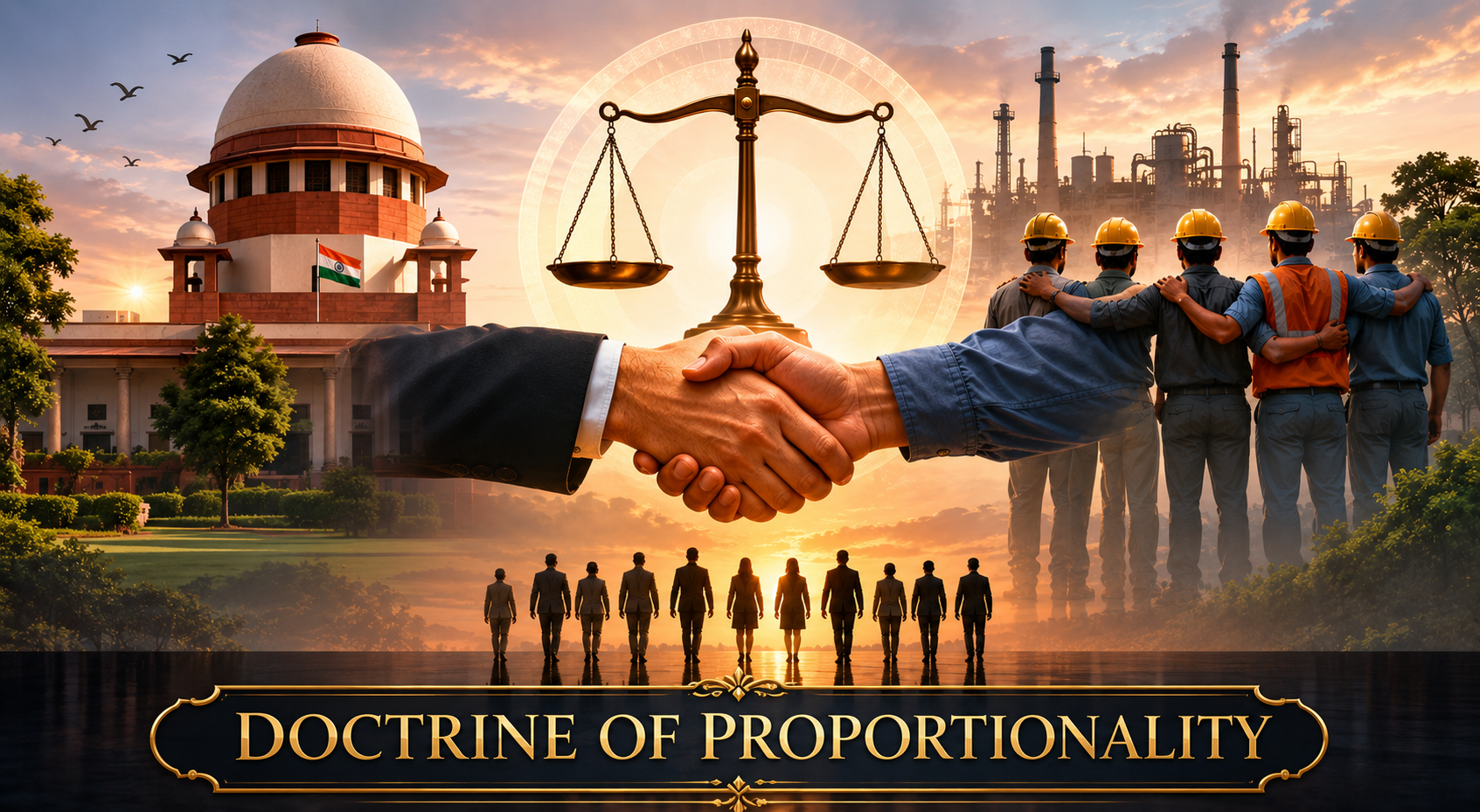
CASE BRIEFING – DOCTRINE OF PROPORTIONALITY
Introduction: Doctrine Of ProportionalityThe doctrine of proportionality is one of the main principles that guide administrative law. The doctrine of proportionality is a legal principle which requires that the acts performed by the government are proportional, reasonable, and fair. The principle is created to stop the government from taking decisions which are harsher than necessary to achieve its aims....
The Transgender Persons (Protection of Rights) Amendment Bill 2026: A Constitutional Analysis
AbstractThe Transgender Persons (Amendment) Bill, 2026 narrows the legal recognition of transgender identity to socio-cultural categories of people (kinner, hijra, aravani, and jogta or eunuch) and intersex variations based on biological traits and explicitly excludes self-perceived genderidentities and trans men/women irrespective of whether a person has undergone sex reassignment surgery. The proposed amendment omits the right of self-identification and...
Supreme Court Rules (Amendment) 2025: Procedural Reforms in Litigation
Supreme Court of India is the sole interpreter of Constitution and the protector of the fundamental rights under the Constitution of India, 1950. The Court has always been grappling with its problems including high case pendency, endless procedural delay, and overly complicated filing procedure despite its pivotal position. These issues do not only weigh down on the judiciary, but...